


 United States (USD)
 Singapore (SGD)
 Thailand (THB)
 African Country (USD)
 Australia (AUD)
 Canada (USD)
 Egypt (USD)
 European Country (EUR)
 Hong Kong (HKD)
 India (USD)
 Iran (USD)
 Iraq (USD)
 Japan (JPY)
 Myanmar (USD)
 Oman (USD)
 Qatar (USD)
 Saudi Arabia (USD)
 Switzerland (CHF)
 Taiwan (USD)
 Turkey (USD)
 UAE (USD)
 United Kingdom (GBP)
 International (USD)
Rated 4.98-stars across 3.9K+ reviews


 By
By
CRISPR is the gene-editing technology that revolutionized science and won a Nobel Prize. Learn how it works like molecular scissors, its hope for treating thalassemia and sickle cell disease, and the ethical questions it raises.
Over the past decade, one technology has truly revolutionized genetics, even earning a Nobel Prize: CRISPR. This article explains what it is, how it works, and what doors it opens — in easy-to-understand language.
CRISPR was originally a natural immune system in bacteria used to defend against viruses. Scientists adapted it into a precise gene-editing tool. Its key strengths are that it's cheaper, faster, and easier to use than previous gene-editing technologies, which has dramatically accelerated research worldwide.
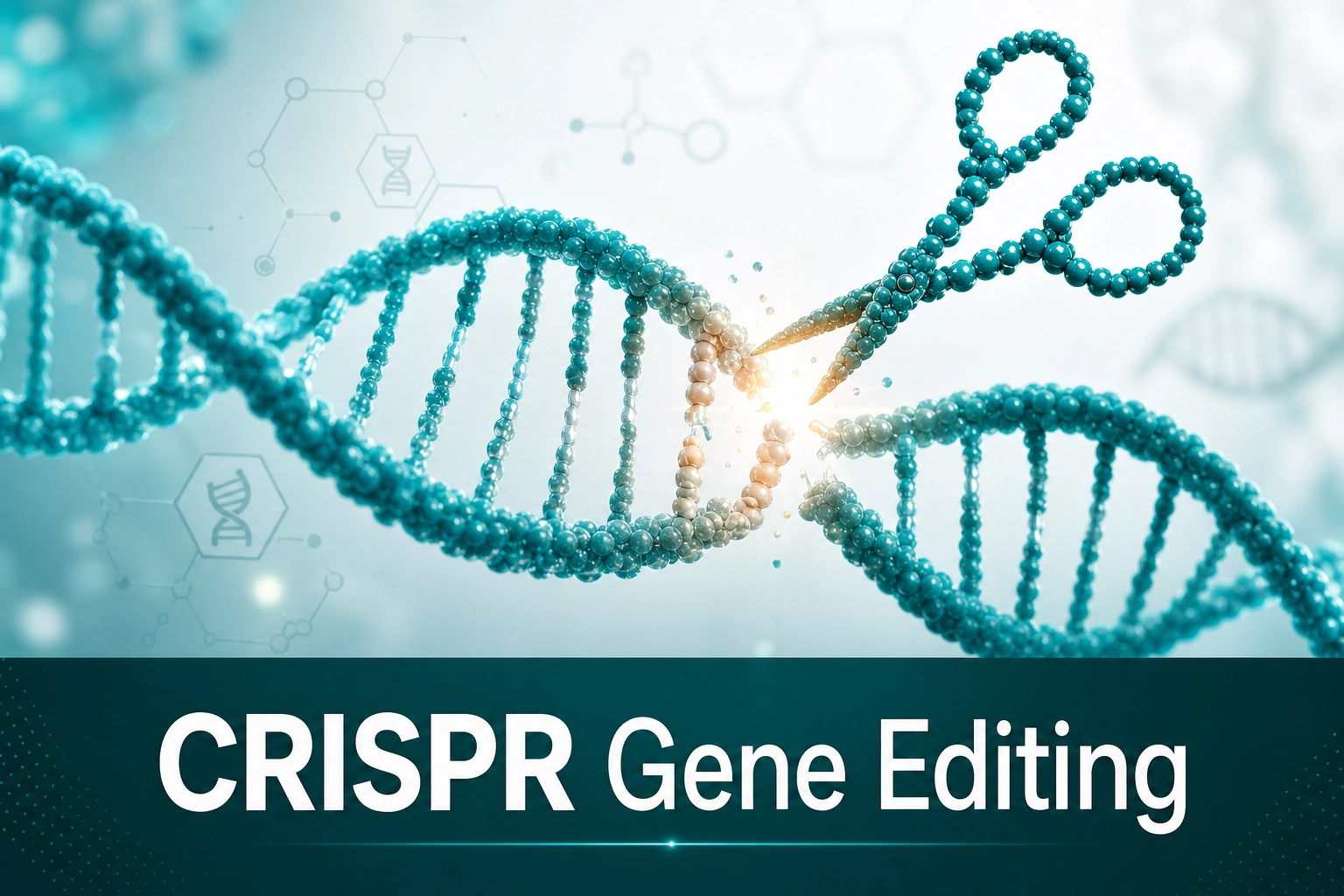
At the heart of CRISPR is a protein called Cas9 that acts like scissors, and a "guide RNA" that navigates to the target DNA location. Once there, Cas9 cuts the DNA at that spot, after which the cell repairs it — the window during which scientists can "edit" the gene sequence. It's like using "find and replace" on the genetic code.
CRISPR opens possibilities for treating genetic diseases that were once untreatable. There has been real progress in treating sickle cell disease and thalassemia, blood disorders found in Thailand too. There's also research in cancer, eye diseases, and infections. While many are still experimental, the direction is very exciting.
The power of CRISPR comes with responsibility. Editing genes in body cells (that aren't passed to children) is more accepted, but editing genes in reproductive cells or embryos that pass to the next generation raises serious ethical questions. The world therefore regulates this strictly. It's something society must carefully define together.
CRISPR is one of the greatest scientific advances of our era. It offers both hope and challenges. Understanding its basics helps us follow the news and join the discussion with real information. Genetic technology isn't only for humans — it's used in pets too. If you're curious what technology pet DNA testing uses, read Microarray vs Sequencing for pets on Geneus Pet. And while CRISPR is about editing genes, the first step to understanding yourself still starts with a DNA test to know your own genetic code.
1. How does CRISPR work, simply put?
CRISPR uses the Cas9 protein as "scissors" and a guide RNA to navigate to a target DNA site to cut and edit it — like a "find and replace" function for the genetic code.
2. Can CRISPR really treat thalassemia?
There's been real progress — clinical trials using CRISPR to treat sickle cell disease and thalassemia have shown good results, though much is still in research and access remains limited.
3. Is CRISPR gene editing safe and ethical?
Editing body (somatic) cells that aren't passed on is more widely accepted, while editing germline cells or embryos remains ethically contentious and is tightly regulated worldwide.

