


 United States (USD)
 Singapore (SGD)
 Thailand (THB)
 African Country (USD)
 Australia (AUD)
 Canada (USD)
 Egypt (USD)
 European Country (EUR)
 Hong Kong (HKD)
 India (USD)
 Indonesia (IDR)
 Iran (USD)
 Iraq (USD)
 Myanmar (USD)
 Oman (USD)
 Qatar (USD)
 Saudi Arabia (USD)
 Switzerland (CHF)
 Taiwan (USD)
 Turkey (USD)
 UAE (USD)
 United Kingdom (GBP)
 International (USD)
Rated 4.98-stars across 3.9K+ reviews


 By
By
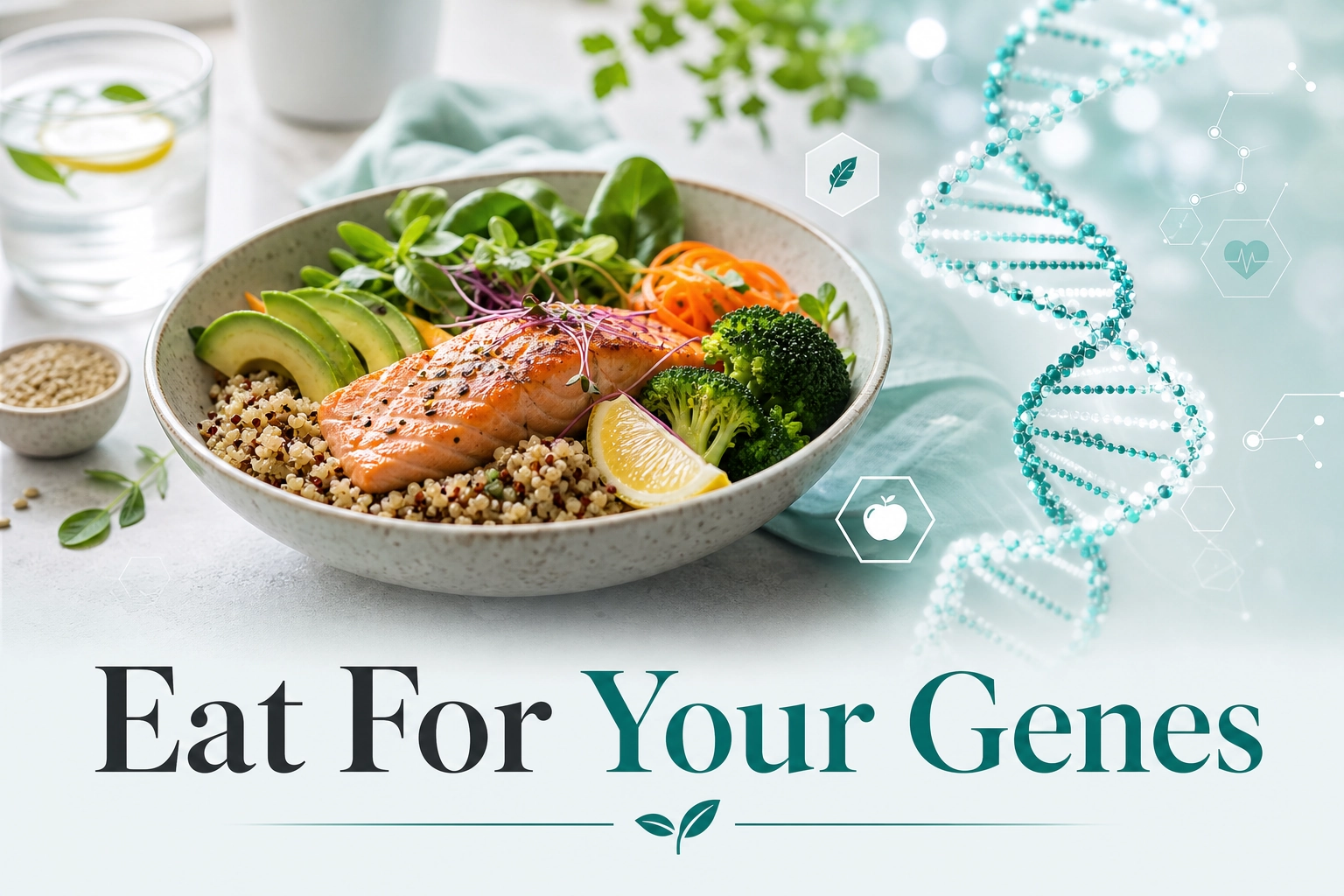
Your friend gets lean on keto; you follow it exactly and stall. It isn't willpower — it's genetics. Meet nutrigenomics, the science of which foods truly fit your DNA.
Ever watched a friend drop weight on keto while you followed it to the letter and just felt tired? Or seen someone eat white rice every day with steady blood sugar, while a little sweet fruit sends yours soaring? The answer isn't willpower — it's genetics. Each of us processes the same food with different genetic machinery.
Nutrigenomics studies the interaction between genes and nutrients. Put simply: food "talks" to your genes, and your genes answer by speeding up or slowing down metabolism, fat storage, or inflammation. That's why two people on the same menu get two different outcomes. Review studies report clear gene–diet interactions in conditions such as obesity and diabetes.
Instead of trial-and-error dieting for years, start from real data with a genetically personalized nutrition plan — learn the macro balance your body is built for, then tune your meals to it. That said, be wary of services making exaggerated claims, and always interpret results alongside standard nutrition science.
I meet so many patients blaming themselves — "why isn't it working when I do everything right?" — when the truth is they're running someone else's program. The best diet is the one designed for your genes. If you want to start precisely, see how a DNA test reveals your body's real needs in the future of DNA-based wellness, and start with your next meal.
1. Does nutrigenomics replace dieting?
No. Nutrigenomics shows the tendencies that fit your genes, but it still takes discipline and exercise alongside it.
2. Do I have to eat the same way forever?
Your genes don't change, but knowing them helps you choose food smarter for life.
3. Do I need to re-test my DNA?
One test lasts a lifetime — your DNA doesn't change with age.

