


 United States (USD)
 Singapore (SGD)
 Thailand (THB)
 African Country (USD)
 Australia (AUD)
 Canada (USD)
 Egypt (USD)
 European Country (EUR)
 Hong Kong (HKD)
 India (USD)
 Indonesia (IDR)
 Iran (USD)
 Iraq (USD)
 Myanmar (USD)
 Oman (USD)
 Qatar (USD)
 Saudi Arabia (USD)
 Switzerland (CHF)
 Taiwan (USD)
 Turkey (USD)
 UAE (USD)
 United Kingdom (GBP)
 International (USD)
Rated 4.98-stars across 3.9K+ reviews


 By
By
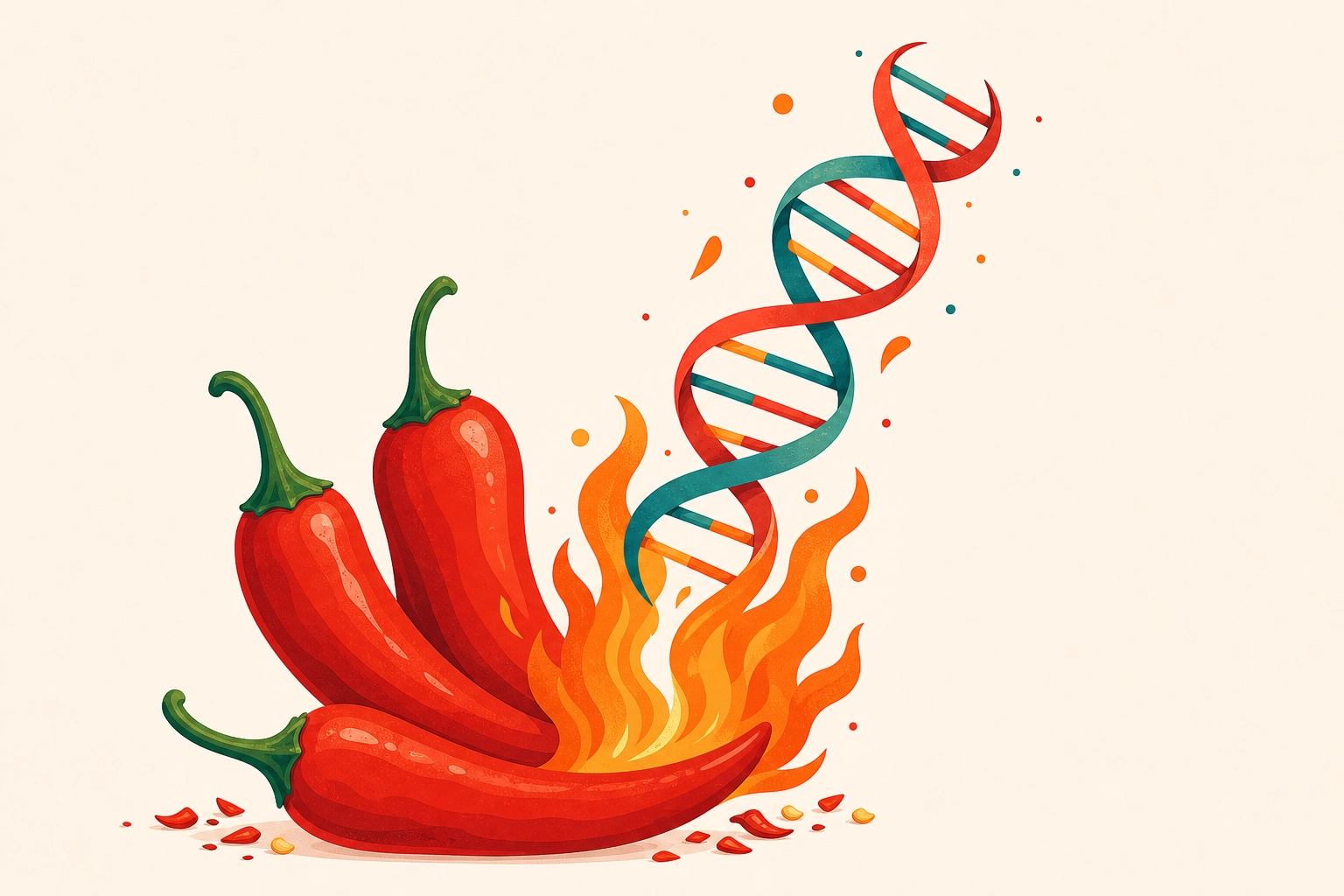
Thais and fiery som tam go together, but why do some handle extreme heat while others tear up at a chili? The answer is the TRPV1 heat-receptor gene, working together with practice.
Thais and fiery som tam go hand in hand — but why can some people slurp the spiciest nam phrik with ease while others tear up at the sight of a chili? The answer is hiding in our genes!
Here's the twist: spiciness isn't a flavor like sweet or salty — it's a pain signal! Capsaicin in chili binds to a receptor called TRPV1, which normally warns you "hot!" Your brain reads it as your mouth burning, even though the temperature hasn't risen at all.
Food and genes are more entwined than you'd think — just like how your genes decide which foods suit you or how some people clear caffeine faster than others.
Capsaicin has some research support for a mild metabolism and anti-inflammatory boost — but "moderation" is the key word, since too much heat can irritate the stomach (studies link heavy spicy-food intake to fullness and upper-GI symptoms in people with functional dyspepsia). Curious which foods fit your body? Try a genetically personalized nutrition plan.
Next time a friend teases you for being "weak with spice," tell them it's your extra-sensitive TRPV1 gene (then smile confidently). Want to know what else your genes hide? Start with the future of DNA-based wellness. 🌶️
1. Can I really train myself to handle more spice?
To a degree. Eating spicy food often makes TRPV1 respond less, but your gene's baseline sensitivity stays the same.
2. Is spicy food dangerous?
Not if eaten in moderation, though very intense spice can irritate the digestive tract and stomach.
3. Can a DNA test show my spice tolerance?
Yes — TRPV1 sensitivity can be detected through genetic testing.

