
 United States (USD)
 Singapore (SGD)
 Thailand (THB)
 African Country (USD)
 Australia (AUD)
 Canada (USD)
 Egypt (USD)
 European Country (EUR)
 Hong Kong (HKD)
 India (USD)
 Indonesia (IDR)
 Iran (USD)
 Iraq (USD)
 Japan (JPY)
 Myanmar (USD)
 Oman (USD)
 Philippines (USD)
 Qatar (USD)
 Saudi Arabia (USD)
 Switzerland (CHF)
 Taiwan (USD)
 Turkey (USD)
 UAE (USD)
 United Kingdom (GBP)
Rated 4.98-stars across 4.8K+ reviews


 By
By
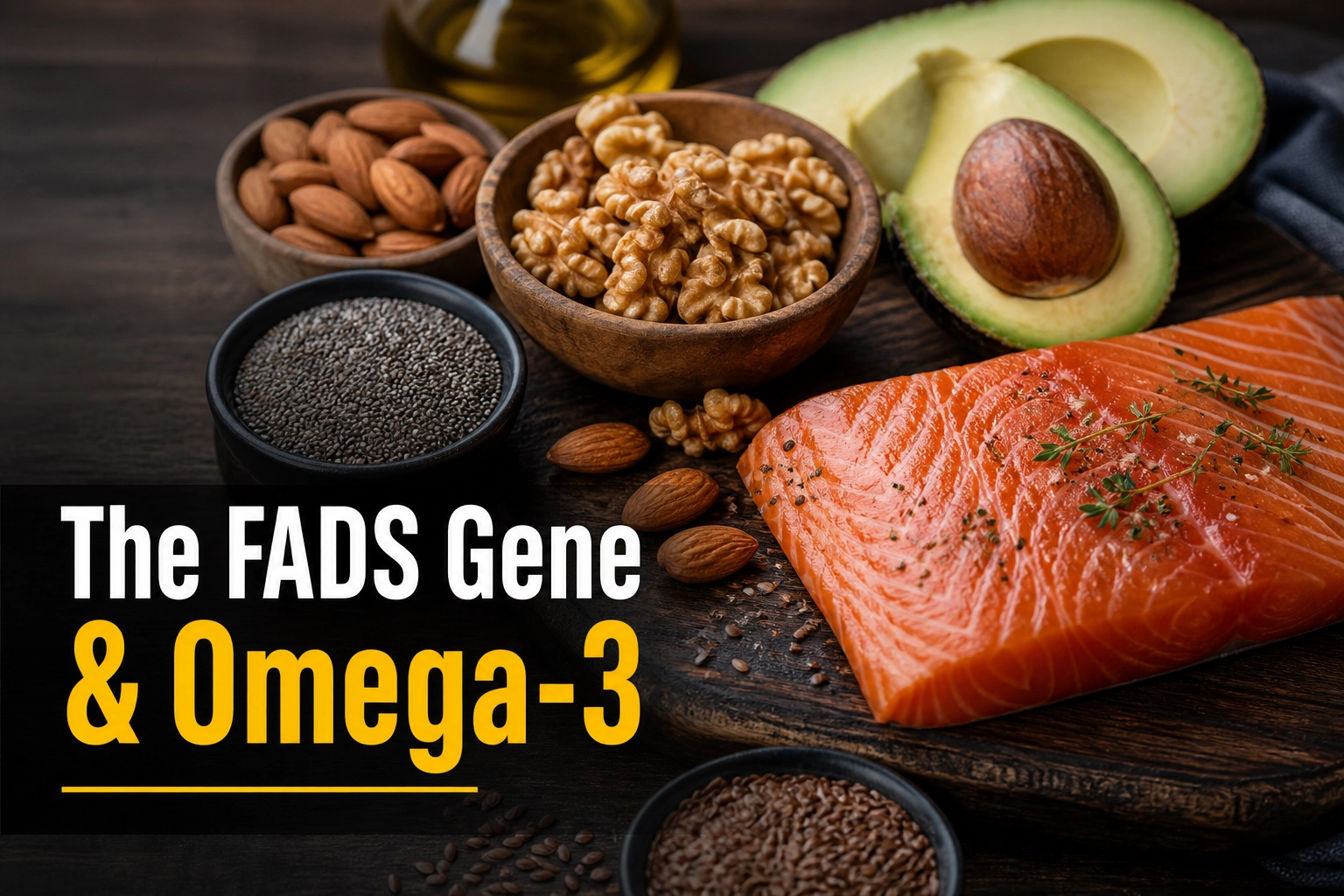
Your FADS1 and FADS2 genes determine how efficiently your body turns plant omega-3 (ALA) into EPA and DHA. People with low-efficiency variants may benefit more from direct EPA/DHA sources.
Hello, from the medical team at Geneus DNA. One question I hear constantly is: "I eat flaxseed and chia every day, so why isn't my blood omega-3 going up?" Part of the answer is hidden in a group of genes called FADS. Today I'll walk you through how these genes work, why two people eating the same diet can end up with different EPA/DHA levels, and how this insight can help you choose omega-3 sources more wisely.
When we say "omega-3," we're actually talking about several different fatty acids. The three main ones to know are:
The point is that most of the health benefits we hear about, especially for the heart and brain, come mainly from EPA and DHA. Plant-based ALA has to be "converted" into EPA/DHA before it can deliver those benefits — and that is exactly where the FADS genes come in.
The FADS1 and FADS2 genes sit next to each other on chromosome 11 and produce two enzymes: delta-5 desaturase (from FADS1) and delta-6 desaturase (from FADS2). Together this pair works like machines on a production line, gradually extending and adding bonds to ALA until it becomes EPA, then continuing on toward DHA.
The problem is that this step is naturally inefficient. Human studies estimate that, on average, we convert only about 5–10% of ALA into EPA and less than 1% into DHA, with women of reproductive age converting slightly better than men due to the influence of estrogen. When conversion is already low, genetic differences matter even more, because they can push these numbers lower still.
Single-nucleotide variations, or SNPs, in the FADS region (commonly studied ones include rs174537, rs174546, and rs174575) are associated with how active the desaturase enzymes are. In simple terms:
Interestingly, the frequency of these variants differs by ancestry, reflecting adaptation to ancestral diets. This is a great example of nutrigenomics, the study of how genes and diet interact.
Based on the mechanism above, the following groups have good reason to consider ready-made EPA/DHA sources rather than relying on plant ALA alone:
Common direct EPA/DHA sources include oily fish (salmon, mackerel, sardines), fish oil, and algae oil for those who don't eat fish. The advantage of these sources is that they "skip the bottleneck" of the desaturase enzymes entirely, so your body doesn't have to rely as heavily on FADS gene efficiency.
I want to be clear that our knowledge of the FADS genes has limits worth keeping in mind when interpreting results.
In short, FADS gene data is "one piece of a larger picture" that helps you choose omega-3 sources that suit you better — not a health verdict. Before starting supplements or making major dietary changes, especially if you have a chronic condition or take blood-thinning medication, always consult your doctor first. This same idea of using genetics to guide nutrition also applies to other nutrients, such as vitamin D and genetics.
1. What is the FADS gene, and why does it matter for omega-3?
FADS1 and FADS2 are genes that build desaturase enzymes, which convert short-chain plant omega-3 (ALA) into the long-chain EPA and DHA your body can actually use. Variations in these genes mean different people convert ALA at different rates, even on the same diet.
2. If I have a slow-converter FADS variant, what should I do?
It means relying on plant ALA alone, such as flaxseed or chia, may not give you enough EPA/DHA. Consider direct sources like oily fish, fish oil, or algae oil if you don't eat fish, and confirm your status with an Omega-3 Index test alongside your doctor's advice.
3. Should vegetarians or vegans be concerned about this?
This is a group worth extra attention, since they don't get EPA/DHA directly from fish and must rely on inefficient ALA conversion. A good option is algae oil, which provides EPA/DHA directly from a plant source.
4. Can a FADS gene test replace a blood test?
They don't replace each other. Genetics indicates your conversion tendency, while an Omega-3 Index test shows your current, real status. Using both together helps you plan nutrition more precisely.

