
 United States (USD)
 Singapore (SGD)
 Thailand (THB)
 African Country (USD)
 Australia (AUD)
 Canada (USD)
 Egypt (USD)
 European Country (EUR)
 Hong Kong (HKD)
 India (USD)
 Indonesia (IDR)
 Iran (USD)
 Iraq (USD)
 Japan (JPY)
 Myanmar (USD)
 Oman (USD)
 Qatar (USD)
 Saudi Arabia (USD)
 Switzerland (CHF)
 Taiwan (USD)
 Turkey (USD)
 UAE (USD)
 United Kingdom (GBP)
Rated 4.98-stars across 4.8K+ reviews


 By
By
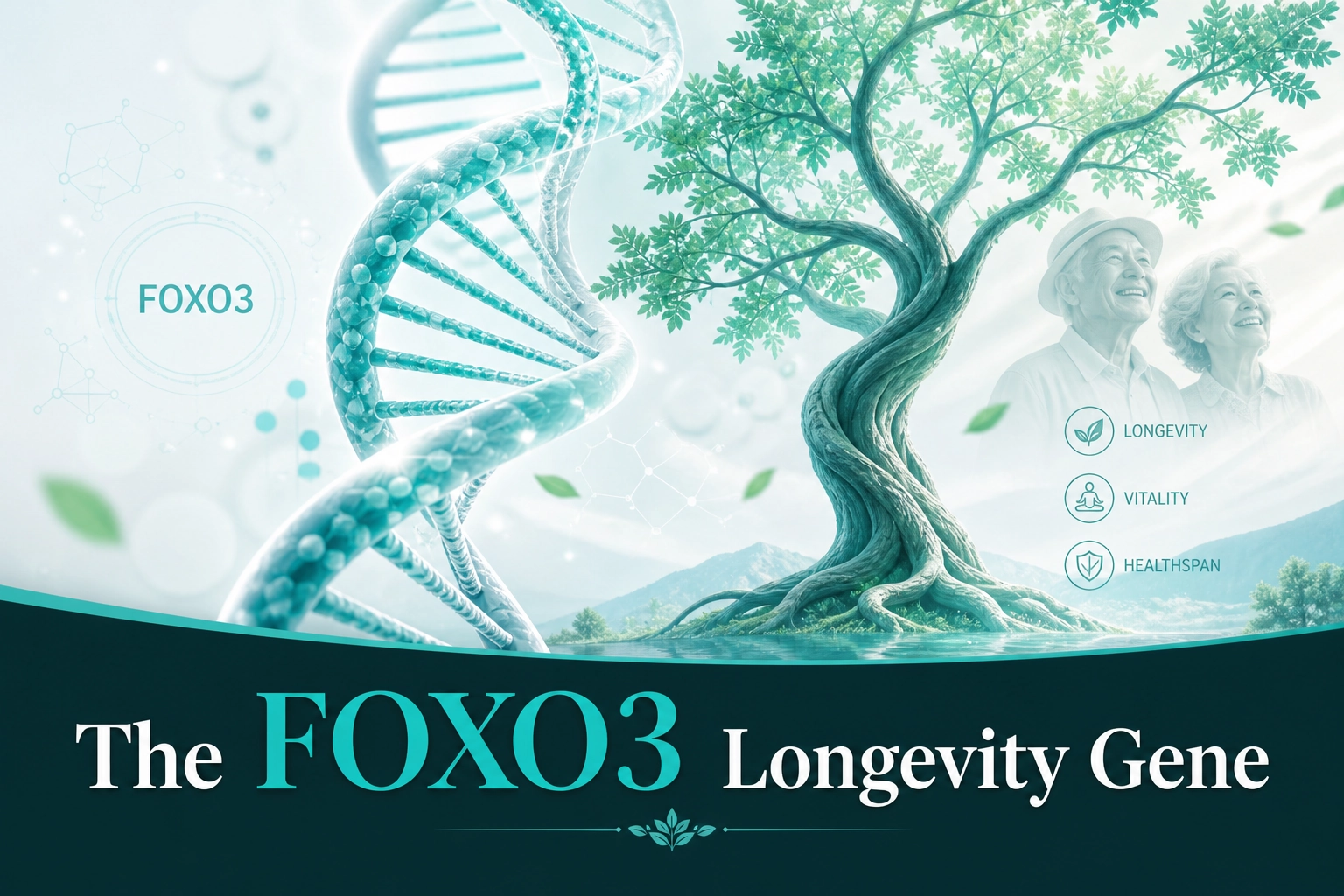
Why do some people stay strong past 100? One answer is the FOXO3 gene, found often in long-lived people worldwide. Learn how it resists oxidative stress and repairs cells, and how lifestyle can activate it.
As someone passionate about aging well, I've always been fascinated by one question: why do some people stay strong past 100 years old? One of the clearest answers science points to is a gene called FOXO3. This article shares why it's so special.
FOXO3 makes a "transcription factor" protein that acts like a manager switching other genes on and off, especially genes involved in protecting cells from damage. When the body faces stress, FOXO3 directs cells to repair themselves and clear out waste.
What makes FOXO3 stand out is that it's one of the few genes repeatedly associated with longevity across many populations worldwide — from Japan to Europe to America. Studies of centenarians (people over 100) find certain FOXO3 variants appear significantly more often than in the general population. This connects with telomeres and aging.
FOXO3 plays a role in many pathways important to slowing aging — resisting oxidative stress, repairing DNA, controlling the death of damaged cells, and managing free radicals. In simple terms, it helps cells become more "resilient" to age-related decline. This connects with NAD+ and anti-aging.
The good news is FOXO3 doesn't work in a vacuum. Lifestyle factors like caloric restriction, exercise, and stress management can activate the FOXO3 pathway. That means even if you don't have the best variant, you can still support this system through behavior. This is the heart of the biohacking I believe in.
FOXO3 teaches us that longevity isn't just luck or genes alone — it's a partnership between genetic capital and life choices. Knowing what capital you have helps you design a targeted self-care strategy. And a long, happy life often has a four-legged friend by your side — I wrote about that bond in the human-dog bond on Geneus Pet. Start understanding your longevity genes with a DNA test.
1. What gene is FOXO3?
A gene making a transcription factor that switches other genes on and off — especially those involved in cell protection, oxidative-stress resistance, and DNA repair.
2. Why is FOXO3 linked to longevity?
Because certain FOXO3 variants appear more often in people over 100, replicated across many populations worldwide — from Japan to Germany to Italy.
3. If I have good FOXO3 genes, what's next?
Lifestyle factors like caloric restriction, exercise, and stress management help activate the FOXO3 pathway, even without the best variant.

