
 United States (USD)
 Singapore (SGD)
 Thailand (THB)
 African Country (USD)
 Canada (USD)
 Egypt (USD)
 European Country (EUR)
 Hong Kong (HKD)
 India (USD)
 Indonesia (IDR)
 Iran (USD)
 Iraq (USD)
 Japan (JPY)
 Myanmar (USD)
 Oman (USD)
 Qatar (USD)
 Saudi Arabia (USD)
 Switzerland (CHF)
 Taiwan (USD)
 Turkey (USD)
 UAE (USD)
 United Kingdom (GBP)
 International (USD)
Rated 4.98-stars across 3.9K+ reviews


Autophagy is how cells clean and recycle themselves, and intermittent fasting is a powerful trigger. Learn the science behind it, the genes that control it, and how to apply it safely.
"Autophagy" and "intermittent fasting" are hot topics in health and biohacking, but behind the trend is fascinating real science. This article explains how the body cleans itself and where genes come in.
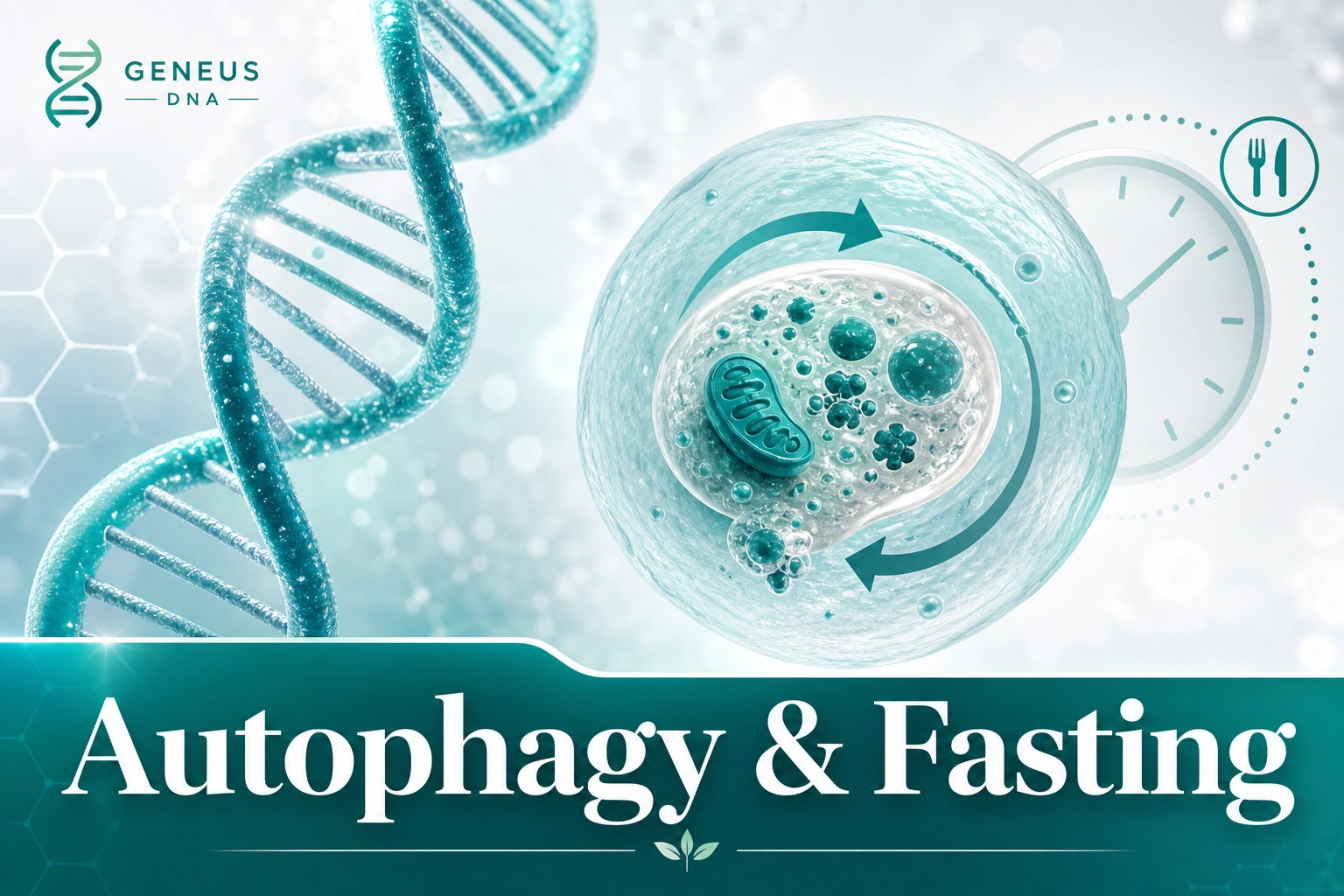
The word autophagy comes from Greek, meaning "self-eating." It sounds scary but it's actually good. It's the process by which cells break down and recycle damaged or old components, such as misfolded proteins or worn-out organelles, to reuse the materials. It's like the cell's waste-disposal and recycling system.
When the body is temporarily short on nutrients, such as during intermittent fasting, cells turn to their internal resources, ramping up autophagy. It's an ancient survival mechanism. Much research is studying how this process relates to aging and health. This connects with NAD+ and anti-aging.
This process is controlled by the ATG (autophagy-related genes) group and key pathways like mTOR (which inhibits autophagy when food is plentiful) and AMPK (which activates it when energy is low). Genetic variation in these pathways may make people respond to fasting differently. This connects with exercise genetics.
While autophagy and fasting are intriguing, they're not for everyone. People with certain health conditions, pregnant women, or those with a history of disordered eating should consult a doctor first. Listening to your body and starting gradually matters more than following extreme trends.
Autophagy reminds us that our body already has a smart self-care system. Our job is to support it mindfully, not force it to the point of harm. Understanding your own genes helps you tailor your strategy. Start with a DNA test.

