
 United States (USD)
 Singapore (SGD)
 Thailand (THB)
 African Country (USD)
 Australia (AUD)
 Egypt (USD)
 European Country (EUR)
 Hong Kong (HKD)
 India (USD)
 Indonesia (IDR)
 Iran (USD)
 Iraq (USD)
 Japan (JPY)
 Myanmar (USD)
 Oman (USD)
 Qatar (USD)
 Saudi Arabia (USD)
 Switzerland (CHF)
 Taiwan (USD)
 Turkey (USD)
 UAE (USD)
 United Kingdom (GBP)
 International (USD)
Rated 4.98-stars across 3.9K+ reviews


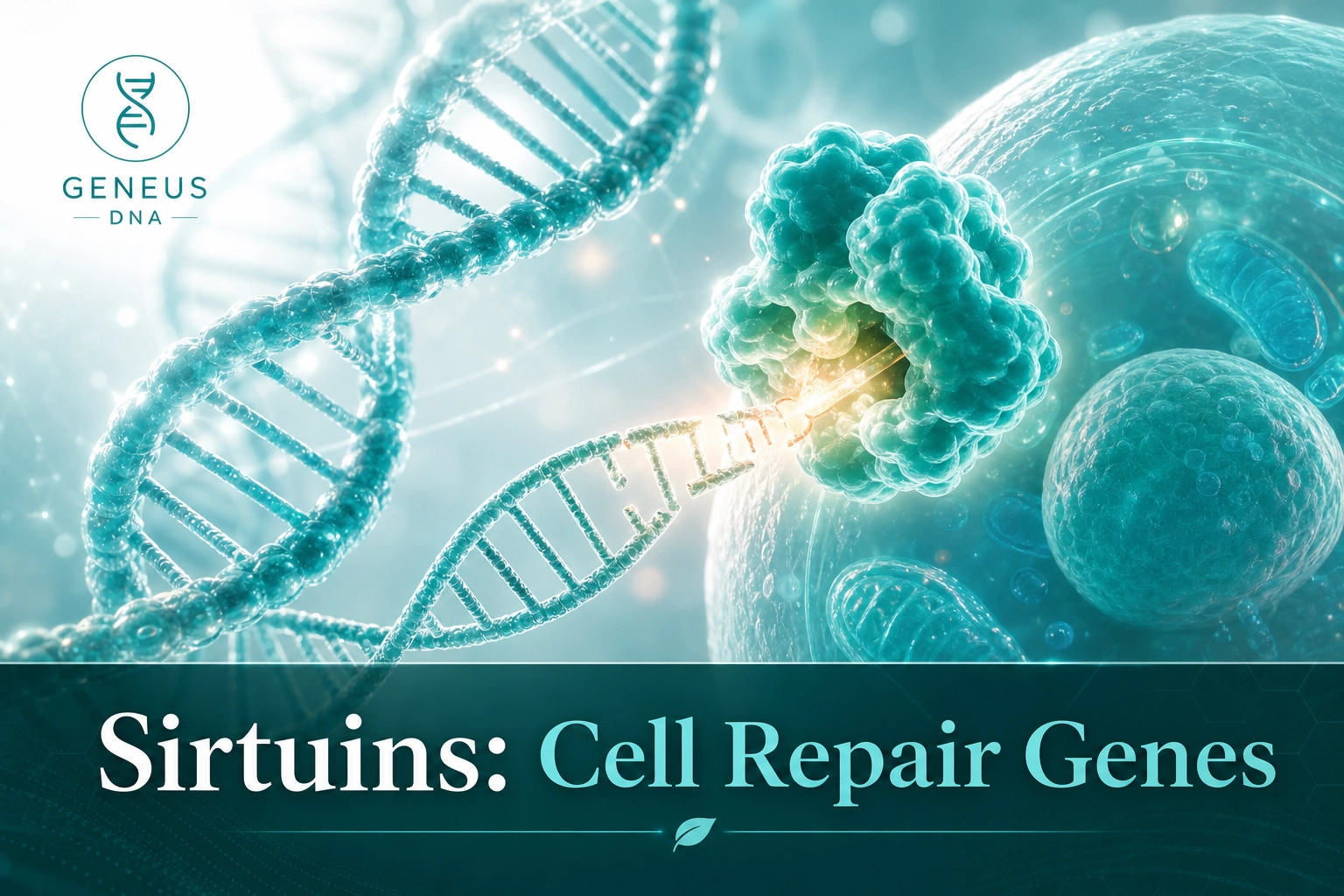
Sirtuins are 7 proteins that care for cell health, repair DNA, and regulate metabolism, needing NAD+ that declines with age. Learn how exercise and caloric restriction can activate them.
In the world of anti-aging, one group of proteins is often called "longevity genes": sirtuins. I'm interested in them because they beautifully connect diet, exercise, and genetics. This article explains what they are.
Sirtuins are a group of 7 enzymes (SIRT1 to SIRT7) that act like managers caring for cell health. They control activities from DNA repair to managing cellular stress to regulating metabolism, earning them a nickname as one of the "longevity genes."
The interesting point is that sirtuins can't work without NAD+, a key fuel molecule for cells. The problem is that NAD+ levels decline with age, so sirtuins work less as we get older. That's why the longevity field is so interested in boosting NAD+. This connects directly with NAD+ and anti-aging.
Research links sirtuins to many benefits — protecting cells from stress, controlling inflammation, maintaining energy balance, and supporting mitochondrial health. These activities all relate to slowing age-related decline. This connects with the FOXO3 gene.
The good news is we can activate sirtuins through behavior. Exercise, caloric restriction, and intermittent fasting are all associated with increased sirtuin activity. There are also dietary compounds like resveratrol studied in this context, though human evidence still needs more research.
Sirtuins are a beautiful example of "we are what we do." Daily behavior affects the cellular mechanisms that care for our aging. Understanding your own genetic capital helps you tailor your strategy. Start with a DNA test.

