


 United States (USD)
 Singapore (SGD)
 African Country (USD)
 Australia (AUD)
 Canada (USD)
 Egypt (USD)
 European Country (EUR)
 Hong Kong (HKD)
 India (USD)
 Indonesia (IDR)
 Iran (USD)
 Iraq (USD)
 Japan (JPY)
 Myanmar (USD)
 Oman (USD)
 Philippines (USD)
 Qatar (USD)
 Saudi Arabia (USD)
 Switzerland (CHF)
 Taiwan (USD)
 Turkey (USD)
 UAE (USD)
 United Kingdom (GBP)
 International (USD)
Rated 4.98-stars across 4.8K+ reviews



 By
By
HLA is the immune system's ID-card gene family, vital for organ transplantation and linked to severe drug reactions like HLA-B*57:01 with abacavir. Learn why HLA typing makes medication safer.
HLA is one of the most variable regions in the human genome, with major roles in transplantation and in preventing life-threatening drug reactions. As a physician, I want to explain what it is and why it matters.
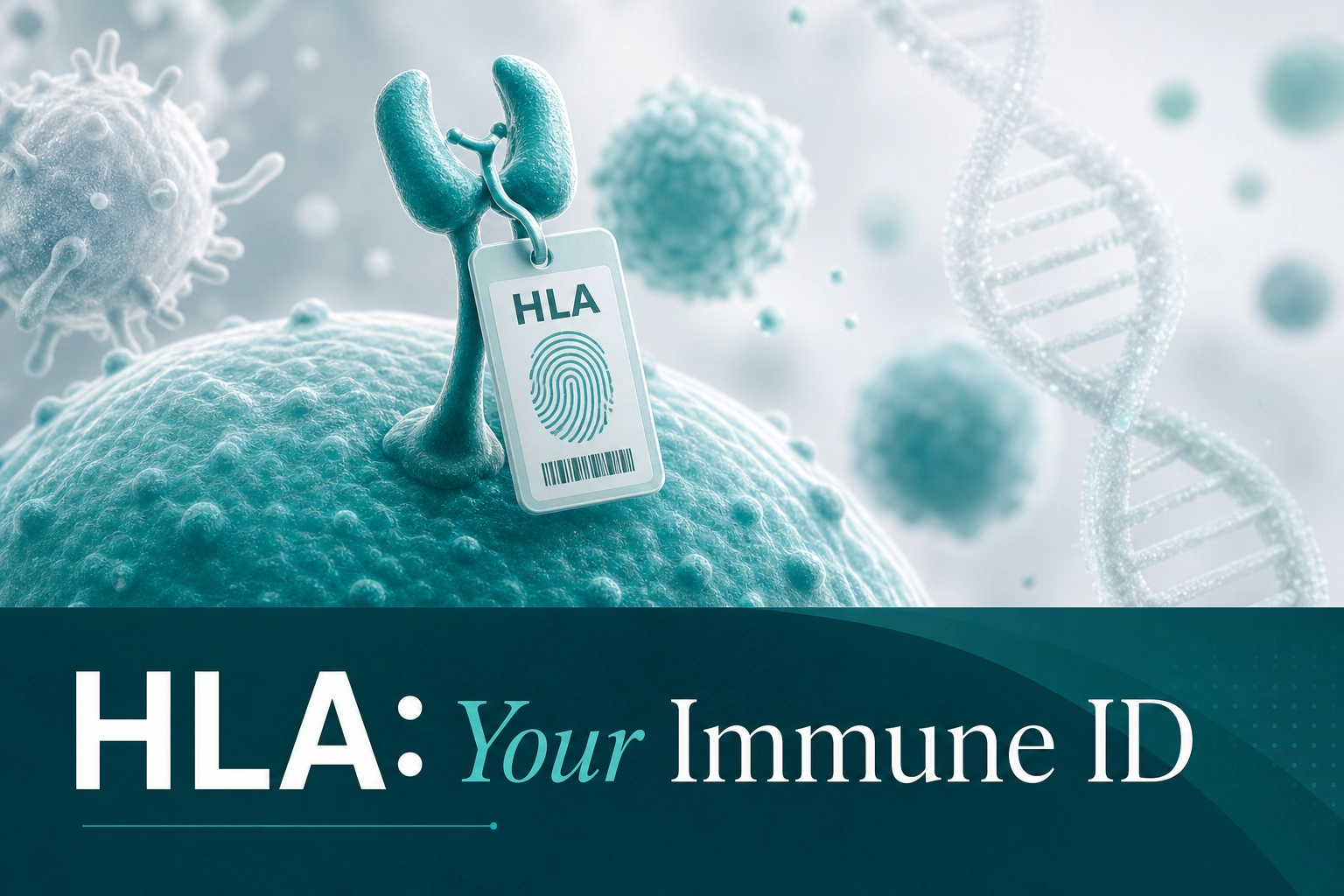
HLA genes sit in the MHC region and make proteins on the cell surface that "present" protein fragments for immune cells (T cells) to inspect — like an ID card marking which cells are "self" and which are "foreign." This system is the heart of immune system genetics.
Because HLA signals tissue "identity," matching HLA between donor and recipient is critical in kidney or bone-marrow transplants. The better the match, the lower the chance the body rejects the organ.
This is where HLA connects directly to pharmacogenomics. Certain HLA alleles are linked to severe cutaneous reactions (such as Stevens-Johnson syndrome). Clear examples:
Testing HLA before starting these drugs helps prevent serious harm.
Research emphasizes that carrying a risk allele is "necessary but not sufficient." Many people with a risk gene never react, because the reaction also depends on other factors such as the T-cell receptor repertoire. So results must always be interpreted by a doctor — never panic or stop a drug on your own.
HLA is a beautiful example of genetics linking immunity, transplantation, and drug safety. Knowing your HLA information is a powerful proactive safeguard. Begin understanding your genetics with a DNA test.
1. What is HLA?
HLA is a gene family making cell-surface proteins that act as the immune system's ID card — marking which cells are self and which are foreign.
2. Why test HLA before a transplant?
It's vital in kidney or bone-marrow transplants to match donor and recipient as closely as possible, reducing rejection risk.
3. Does a risk HLA allele mean I'll definitely react to the drug?
Not always. A risk allele is necessary but not sufficient — many carriers never react. A doctor should always interpret the result.

