


 United States (USD)
 Singapore (SGD)
 African Country (USD)
 Australia (AUD)
 Canada (USD)
 Egypt (USD)
 European Country (EUR)
 Hong Kong (HKD)
 India (USD)
 Indonesia (IDR)
 Iran (USD)
 Iraq (USD)
 Japan (JPY)
 Myanmar (USD)
 Oman (USD)
 Qatar (USD)
 Saudi Arabia (USD)
 Switzerland (CHF)
 Taiwan (USD)
 Turkey (USD)
 UAE (USD)
 United Kingdom (GBP)
 International (USD)
Rated 4.98-stars across 4.8K+ reviews



 By
By
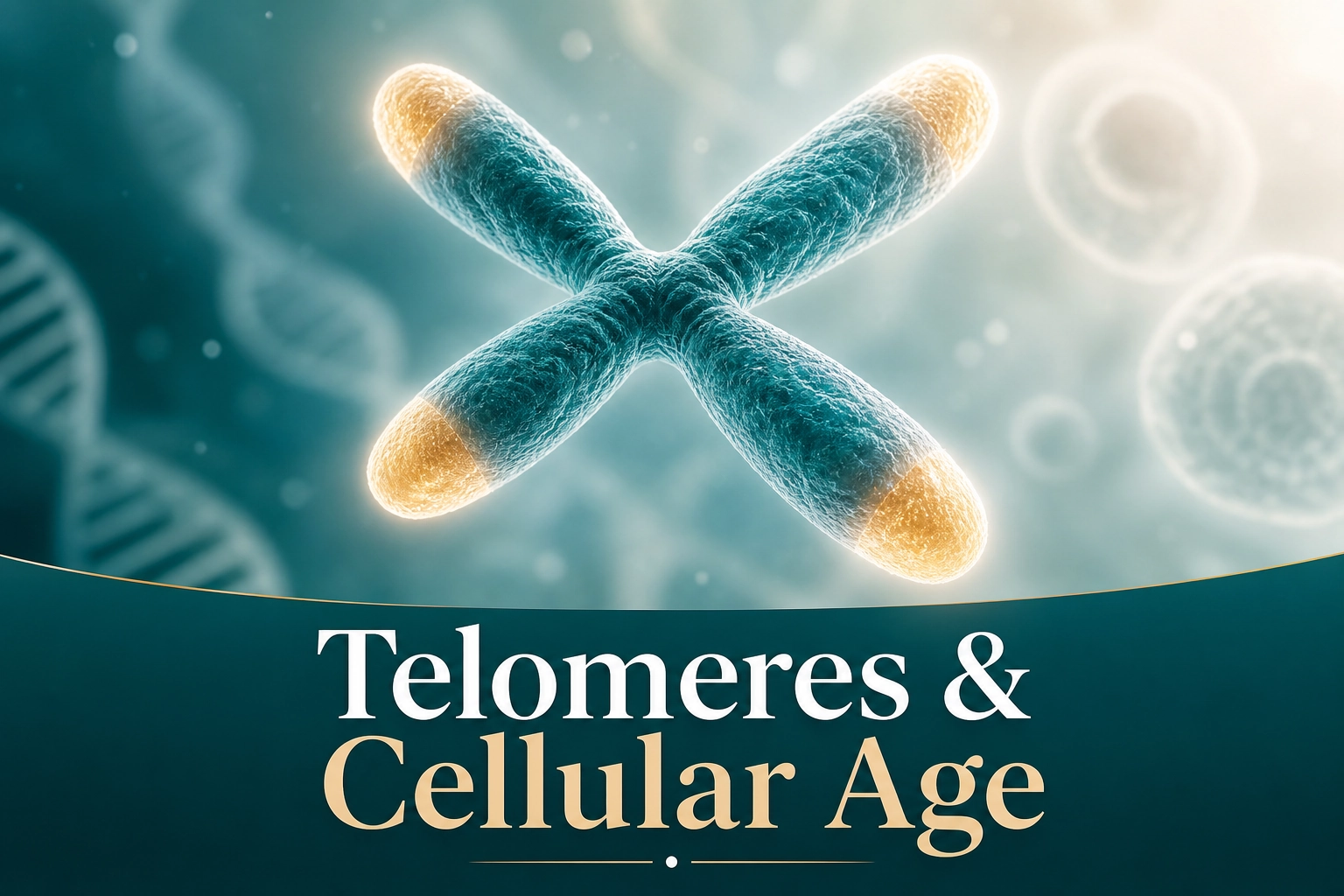
Telomeres are protective caps on chromosome ends that shorten each time a cell divides; when too short, cells age. Learn how they signal cellular age, how much lifestyle helps, and the limits to know.
As a leukemia survivor, I pay special attention to "cellular age," and one of the most-discussed markers is the telomere. Here's what it is, why it matters, and how much we can really influence it.
Picture the plastic tip on a shoelace that stops it from fraying. Telomeres do that for our chromosomes — protective ends that keep important genetic information from being damaged when cells divide.
Each cell division trims a little off the telomere. Once they get short enough, the cell stops dividing and enters "senescence," which is tied to tissue decline. Oxidative stress and chronic inflammation speed the shortening. This is one mechanism behind your manageable biological age.
The body makes an enzyme called telomerase that can add length back, but it's barely active in most adult cells. Research suggests intensive lifestyle change (low-fat diet, regular exercise, stress reduction) may raise telomerase activity — connected to cellular-energy care like NAD+ and longevity.
As exciting as this is, I'll be honest: research still debates how accurately telomere length measures aging. Human evidence is equivocal and depends on the measurement method, so don't trust products that claim to "rebuild telomeres," and don't judge your whole health on a single number.
To me, telomeres are a beautiful reminder that slowing aging isn't magic — it's the sum of everyday self-care. What's good for your heart, brain, and mood is usually good for your telomeres too. Begin understanding your body with a DNA test.
1. Can you really lengthen telomeres?
Partly. Research suggests good lifestyle may slow telomere shortening somewhat, but it's not permanent age reversal.
2. Can telomere length be tested?
Yes — tests measure telomere length (e.g., from white blood cells), but interpret it alongside other markers, not as a single verdict.
3. Do telomere supplements actually work?
Be wary of products claiming to "rebuild telomeres" — evidence is limited. Focusing on overall lifestyle is safer.

