


 United States (USD)
 Singapore (SGD)
 African Country (USD)
 Australia (AUD)
 Canada (USD)
 Egypt (USD)
 European Country (EUR)
 Hong Kong (HKD)
 India (USD)
 Indonesia (IDR)
 Iran (USD)
 Iraq (USD)
 Japan (JPY)
 Myanmar (USD)
 Oman (USD)
 Philippines (USD)
 Qatar (USD)
 Saudi Arabia (USD)
 Switzerland (CHF)
 Taiwan (USD)
 Turkey (USD)
 UAE (USD)
 United Kingdom (GBP)
 International (USD)
Rated 4.98-stars across 4.8K+ reviews


 By
By
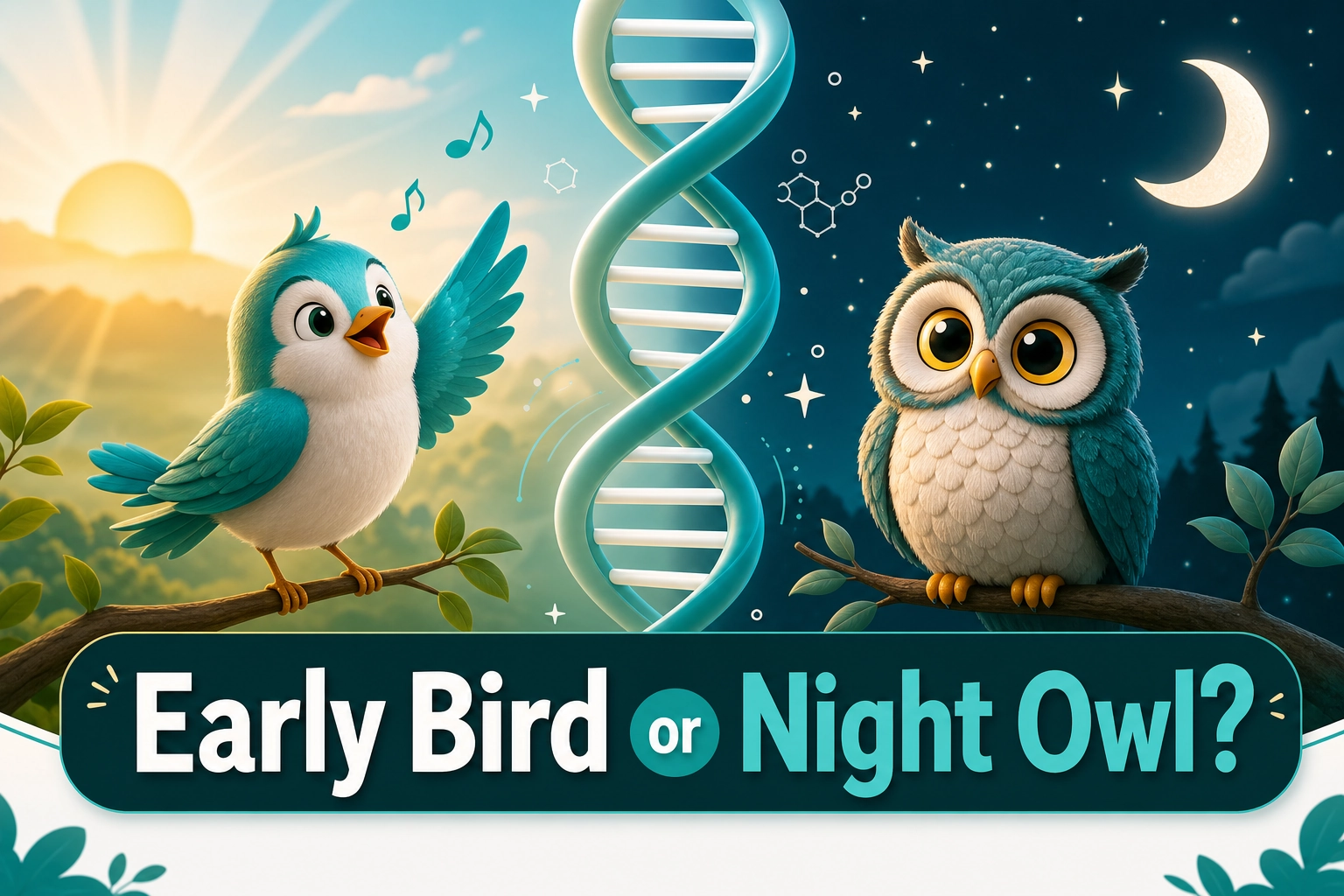
Which team are you? Up at 5 a.m. greeting the dawn, or brain only kicking in at midnight? Many think it's discipline, but biological clock genes help set each person's "golden hours." Let's see how.
Which team are you on? The team up at 5 a.m. greeting the dawn, or the one whose brain only kicks in at midnight? Many think it's just habit or discipline, but our genes actually help set each person's "golden hours." Let's see how.
People have different tendencies for when they're alert and sleepy, called their "chronotype." Some are early birds, fresh in the morning and sleepy early; others are night owls, waking late but peaking at night; and most are somewhere in the middle. It's natural — not a matter of who's more diligent or lazy.
Our bodies have an "internal clock" that controls when we feel awake or sleepy. It's driven by several biological clock genes, such as the PER and CLOCK families. A large genome-wide study of nearly 700,000 people increased the number of genetic loci associated with being a morning person from 24 to 351, and these genes are involved in circadian regulation and brain signalling pathways (Jones et al., Nature Communications, 2019). If you'd like a deeper read, see our chronotype genetics article.
Problems arise when we force ourselves against our clock — for example, a night owl who has to wake early for work every day develops social jetlag, where the internal clock doesn't match the social schedule. Research found that night owls show the largest difference in sleep timing between work days and free days, building up sleep debt and tending toward more accumulated stress and smoking than early birds (Wittmann et al., Chronobiology International, 2006). Understanding your chronotype helps you align your life with your body.
Even though we can't change our genes, we can adjust our clock a bit — getting morning sunlight helps you wake more easily, avoiding bright screens before bed, and keeping consistent sleep/wake times. Importantly, if you can, schedule high-focus work during your own "golden hours."
Next time someone says you wake up late, tell them it's in your genes! Knowing your chronotype isn't an excuse — it's a tool to design a day that works with your body. If you want to know your biological clock genes and other traits, check out a DNA test.
1. Can an early bird or night owl change?
Partly yes. Chronotype is set by several biological clock genes, but it can be adjusted somewhat with light and behavior.
2. What is social jetlag?
It's when your internal clock doesn't match your social schedule, like a night owl forced to wake early, causing chronic sleep loss and fatigue.
3. Can I adjust to become a morning person?
Somewhat. Morning sunlight and consistent sleep times help adjust your clock, but you can't fully change your base chronotype.

